Do You Need a Destination Wedding Planner in Mexico? How to Choose One
What a destination wedding planner actually does, local vs. home-country planners, full-service vs. day-of, how remote planning works and how to hire the right one for San Miguel de Allende.
By Vid de Luna Team
Cover photo: Jorge L. Valdivia / Unsplash
Short answer: for a destination wedding in Mexico, most couples from the US and Canada benefit from a planner, because someone has to be on the ground to meet vendors, read Spanish contracts, handle local permits and run the day. Hire full-service planning if you're starting from zero or have a big guest list, partial planning if you've already booked the venue and some vendors, and day-of coordination at the very least.
Key takeaways
A destination planner's real value is local: vendor relationships, permits, seasons, guest logistics and bilingual coordination.
A local, bilingual planner usually knows the town better; a home-country planner is easier to meet but often depends on local partners.
Remote planning works well with a structured schedule of video calls and one or two site visits.
Compare proposals by scope, not package names, and get everything in writing.
Your planner and the venue team have different jobs. Agree early on who handles what.
Planning a wedding in another country feels like a lot until you split it into pieces. This guide covers how a planner fits into a destination wedding in Mexico, with San Miguel de Allende as our example. If you're still deciding whether to marry abroad at all, start with our guide to what a destination wedding is and how it works.
What does a destination wedding planner do differently?
A destination planner does everything a regular planner does, plus the work created by distance: planning remotely, representing you on site, and managing travel for you and your guests. At home you can drive to a tasting on a Tuesday. Abroad, someone has to go for you.
Here's what's different:
Remote planning. Decisions happen over video calls, shared spreadsheets and virtual walkthroughs. A good planner turns that into a clear process so nothing gets lost between emails.
Site visits on your behalf. They check spaces, measure, take photos and video, and meet vendors you can't meet in person.
Local vendor network. Florists, photographers, musicians, rentals, hair and makeup. They know who delivers, who speaks English, and who can work with your venue's setup.
Permits and paperwork. A downtown callejoneada (the street parade with giant mojigangas and musicians) needs municipal permits. A legal ceremony needs Civil Registry paperwork. A planner knows which office handles what.
Guest logistics. Airport arrivals, shuttles, room blocks, welcome bags, and information for guests who have never been to Mexico.
Bilingual coordination. Contracts, menus and day-of instructions often move between English and Spanish. Small translation errors cause big problems on the day.
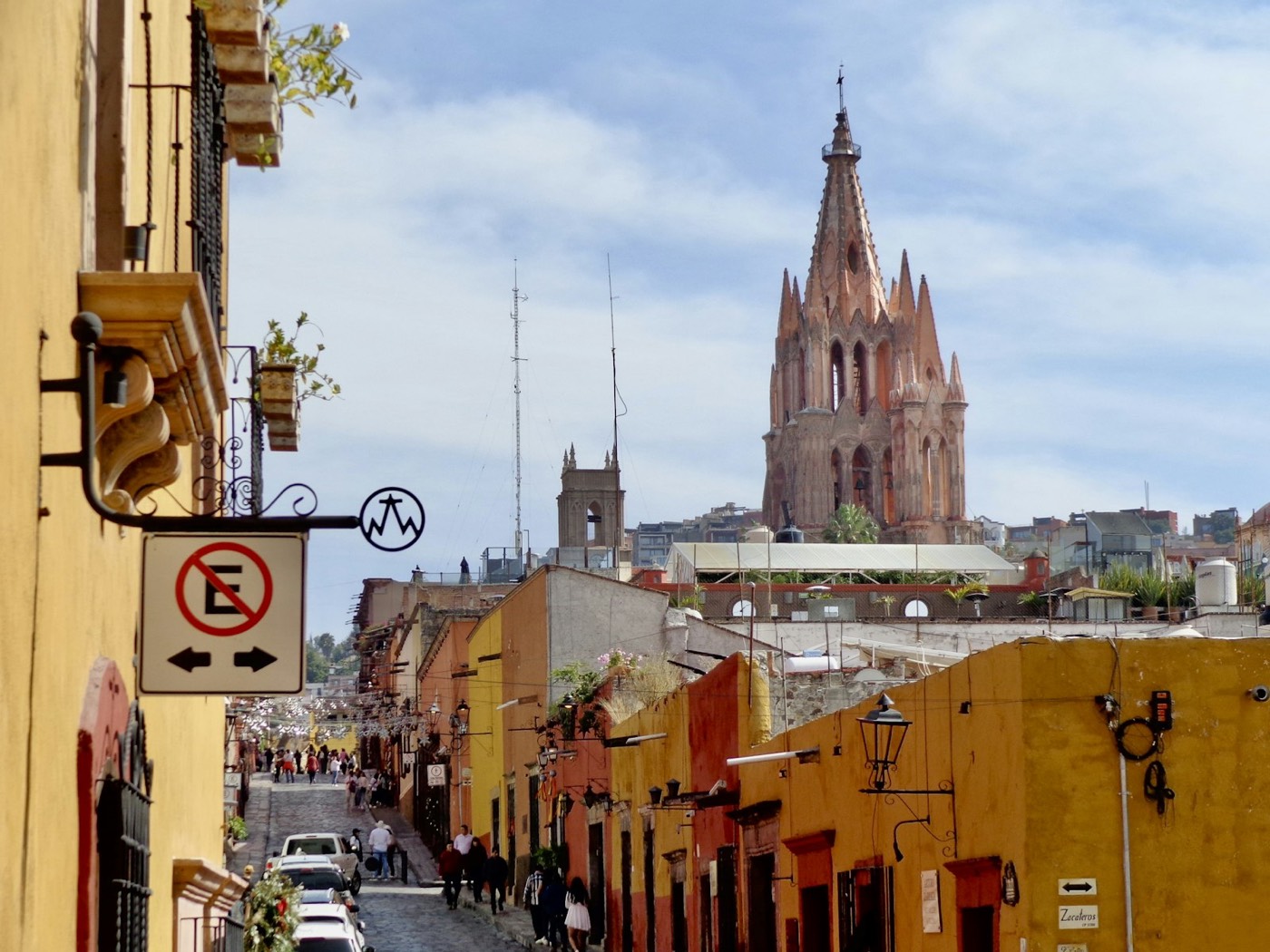
Downtown San Miguel de Allende, where a local planner handles permits for events like a callejoneada — Photo: Jorge L. Valdivia / Unsplash
Should you hire a local planner or one from your home country?
For most weddings in San Miguel de Allende, a local, bilingual planner is the stronger choice, because the hardest work happens on the ground. A home-country planner makes sense if you value in-person meetings at home and they already have a reliable local team.
Local planner (based in Mexico)
Home-country planner (US or Canada)
Knows local vendors and venues
Yes, usually first-hand
Varies; often through local partners
Site visits
Can visit as often as needed
Usually travels in for set visits
Permits and Spanish paperwork
Handles directly
Typically delegates to someone local
Meeting in person before the trip
Only by video, or during your visit
Easy
Time zone
Central Mexico time
Your time zone
Contracts and payments
Often in Mexican pesos, under Mexican law
Often in your currency, under your local law
Travel costs for the planner's team
Low or none
Usually billed to you
Day-of team
Local staff
Planner plus local staff they hire
There's a middle option: a planner from home who partners with a local coordinator. If you go this route, ask who exactly will be at your wedding and who makes the decisions when the two disagree.
Whichever you choose, check that they can communicate comfortably in both English and Spanish, or have someone on the team who does.
Full-service, partial planning or day-of coordination: which do you need?
The right service level depends on how much you've already booked and how far you live from the venue. When planning from abroad, go one level higher than you would at home.
Service level
When they start
What they handle
Best for
Full-service
12–18 months out
Budget, design, all vendors, contracts, guest logistics, the full weekend
Starting from zero, large guest lists, multi-day events
Partial planning
6–9 months out
Fills vendor gaps, reviews contracts, builds the timeline, runs the day
You've booked the venue and a few key vendors
Day-of coordination
1–3 months out
Confirms vendors, builds the run-of-show, runs rehearsal and wedding day
Small weddings, all-inclusive packages, confident DIY couples
Why "day-of" is the minimum. Even if you planned everything yourself, someone has to receive vendors, keep the timeline moving and solve problems while you get ready. Without a coordinator, that job lands on your mom or your maid of honor.
Remote planning works through a schedule of regular video calls, shared documents, and one or two well-planned site visits. The key is batching: each visit should cover as many decisions as possible.
A sample remote planning timeline
When
Format
What happens
12–18 months out
Video calls
Discovery call, budget and guest count, shortlist of venues and dates
10–12 months out
Site visit 1
Tour the venue, meet the photographer and key vendors, book the date, walk the ceremony and reception spaces
9–10 months out
Video call
Book remaining key vendors, plan room blocks, send save-the-dates with travel info
6–8 months out
Video calls (monthly)
Design concept, florals, stationery, guest website, transportation plan
4–5 months out
Video call
Legal or symbolic ceremony details, welcome event and farewell brunch plan
2–3 months out
Site visit 2 (optional)
Menu tasting, hair and makeup trial, final walkthrough with planner and venue team
1 month out
Video calls (weekly)
Final headcount, seating plan, run-of-show, guest arrival schedule
Wedding week
In person
Vendor confirmations, rehearsal, welcome event
Tips that make remote planning easier
Use one shared folder and one budget sheet. Contracts, quotes and decisions in one place prevents mismatched versions.
Ask for video, not just photos. A slow walkthrough of a space shows distances, light and slopes that photos hide.
Plan visit 1 in your wedding season. Visiting in the same month as your date shows you the real weather and light. San Miguel's rainy season runs roughly June to September.
Agree on response times. Know how quickly your planner replies, and on which channel.
What should you ask a destination wedding planner before hiring?
Ask questions that show how they work from a distance, not only what their portfolio looks like.
How many weddings have you planned in San Miguel de Allende, and at which types of venues?
Are you based locally? If not, who is your team on the ground?
Who will be at our wedding, and for how many hours?
How do you handle contracts in Spanish and payments in pesos?
How often will we meet, and on which platform?
Can you share full weddings, not just highlight photos, similar to ours in size?
How do you handle guest logistics: airport transfers, room blocks, welcome info?
What's your plan if it rains or a vendor cancels?
Do you receive commissions from vendors?
What happens if you get sick on our wedding day?
Can we talk to two or three couples who planned from abroad with you?
Red flags
No written contract, or a contract that doesn't define the scope.
No local presence and vague answers about who's actually on site.
Slow replies during the sales stage. It rarely improves after you sign.
No questions about your budget, or proposals far above it.
They insist on their own vendors without explaining why, or criticize every other vendor.
They've never seen your venue and don't plan to visit before the wedding.
Unclear legal advice. A planner who promises a legal marriage in Mexico without mentioning documents, apostilles and the Civil Registry is guessing.
How does a planner work with the venue team?
Your planner manages your vendors and your schedule; the venue team runs the property. When they share information early, the day flows. When they don't, setups clash and timelines slip.
At Vid de Luna, our team coordinates everything that happens on the property and works directly with your planner. Here's what to align early:
What the venue package covers. We offer all-inclusive wedding packages with catering and mixology. Your planner shouldn't quote those separately. For details of what's included in your case, ask us.
The spaces and the rain plan. Ceremonies can happen outdoors among olive trees by the lake, or in the chapel. Receptions can move to the Gran Salón, our Grand Hall, which holds up to 800 guests and has floor-to-ceiling windows. Your planner should know how and when the call to move indoors is made.
Setup and teardown times. These are agreed with the venue, not separately with each vendor.
One run-of-show. The planner builds it and shares it with the venue so everyone works from the same version.
Lodging. Our boutique hotel sleeps up to 80 guests and can be rented in full, with Family Suite, Master Suite, Double and Single rooms. Your planner can coordinate room assignments and arrival times with us.
Guest experiences. A guided tasting of regional wines in our cellar, the spa and hot springs, or an evening by the fire pit can fill a welcome day. Your planner can build these into the weekend schedule.
A simple rule: the venue leads anything inside its operation (kitchen, service, facilities), and the planner leads your agenda and your outside vendors. Any question about outside vendors or venue policies? Ask us before you sign anything.
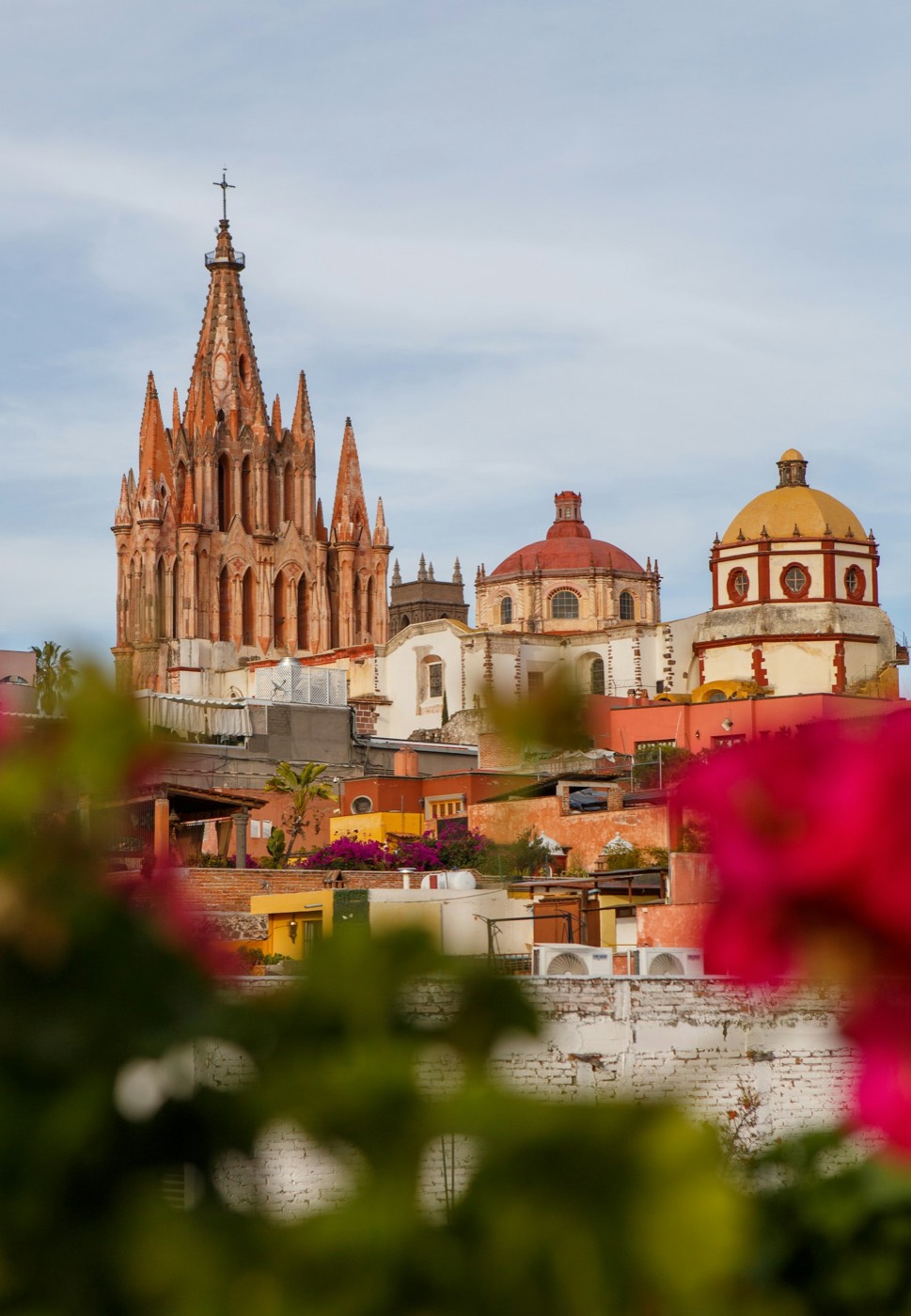
The skyline of downtown San Miguel de Allende, a few minutes from the vineyard — Photo: Mark de Jong / Unsplash
How do destination wedding planners charge?
Most destination planners charge a flat fee per service level, a percentage of the total wedding budget, or a combination. None is better by default; what matters is knowing exactly what you're paying for.
Flat fee. You know the cost up front. Check what happens if your guest count or number of events changes.
Percentage of budget. The fee grows with the wedding. Ask whether it's based on the estimated or the final spend.
Hybrid. A base fee plus a percentage, or extra charges for added events like a welcome party.
Travel expenses. Home-country planners usually bill flights, lodging and meals for their team. Local planners may charge for travel outside town.
What about legal paperwork, passports and guest travel?
A planner can guide you, but official requirements come from governments, not planners. Always confirm with the source.
Legal vs. symbolic ceremony. Many US and Canadian couples marry legally at home and hold a symbolic ceremony in Mexico. A legal civil marriage in Mexico usually needs apostilled documents with certified Spanish translations and, where required, medical tests. Confirm current requirements with the Registro Civil of Guanajuato.
Passports and entry. Check entry requirements with your government or the Mexican consulate well before the trip. For travel advisories, check your own government's current advice, such as travel.state.gov for US citizens.
Getting guests here. San Miguel de Allende is served by Querétaro (QRO, roughly 1 hour 15 minutes away by car), León/Bajío (BJX, roughly 1 hour 30 minutes) and Mexico City (about 3.5 to 4 hours). Flight routes change, so check current options before you send save-the-dates.
Whether you hire full-service planning or a day-of coordinator, start by confirming your date and venue. Then your planner can build everything else around it.
Vid de Luna is a vineyard with a boutique hotel in Loma de los Coyotes, Montecillo de la Milpa, a few minutes from downtown San Miguel de Allende. Contact us or call or WhatsApp +52 415 113 3331 with your date and guest count. We'll tell you how our team works with your planner, and we'll answer anything else when you ask us.
Frequently asked questions
Do I really need a wedding planner for a destination wedding in Mexico?
Most couples do. When you live in the US or Canada, someone on the ground has to meet vendors, check spaces, handle local permits and solve problems in Spanish. A planner, at least partial planning or day-of coordination, is the simplest way to cover that. Very small weddings at a venue with an all-inclusive package can sometimes manage with lighter support.
Should I hire a local planner in Mexico or one from home?
A local planner knows the vendors, permits, seasons and venues, and is there for site visits without travel costs. A home-country planner is easier to meet and shares your time zone and contracts, but usually relies on local partners. Many couples hire a local, bilingual planner, or a home planner who already works with a trusted team in the town.
Can you plan a wedding in Mexico without visiting first?
It is possible, but we don't recommend it. Most of the planning works over video calls, shared documents and virtual tours. One site visit to see the venue and meet key vendors, and ideally a second one for the menu tasting and final walkthrough, prevents most surprises.
How do destination wedding planners charge?
The most common models are a flat fee per service level, a percentage of the total wedding budget, or a mix of both. Destination planners may also bill travel and lodging for their team separately. Ask for a written proposal that lists exactly what is included and what is extra.
How early should we hire a destination wedding planner?
For full-service planning, hire your planner around the time you book the venue, ideally 12 to 18 months before the wedding, so they can help with the big decisions. Partial planning usually starts 6 to 9 months out, and day-of coordination a few months before the date.
Does Vid de Luna have an in-house wedding planner?
Our team coordinates everything that happens on the property and works hand in hand with your planner. We offer all-inclusive wedding packages with catering and mixology. For anything beyond that, including what our team can help with in your specific case, ask us.
About the author
This article is written by the events team at Vid de Luna, a vineyard with a boutique hotel in Loma de los Coyotes, Montecillo de la Milpa, San Miguel de Allende. We host weddings, corporate events and retreats here, and on this blog we share what we learn from every celebration. Questions about your event? Call or WhatsApp us at +52 415 113 3331 or use our contact page.
Picture your wedding at a vineyard in San Miguel de Allende
Vid de Luna offers a Grand Hall for up to 800 guests, garden ceremonies and an on-site boutique hotel for up to 80 guests. Check available dates.