What Is a Destination Wedding? A Complete Guide to Getting Married in Mexico
A destination wedding means traveling with your guests to celebrate somewhere away from home. Here is what that really involves, who it suits, how guest lists and timelines change, and why San Miguel de Allende is a strong alternative to the beach.
By Vid de Luna Team
Short answer: a destination wedding is a wedding held somewhere you and most of your guests travel to, usually over a full weekend rather than a single evening. For couples in the US and Canada, Mexico is a natural choice, and San Miguel de Allende stands out for its colonial UNESCO-listed center, mild highland climate and countryside venues like vineyards with on-site lodging.
Key takeaways
What makes it a destination wedding is the trip, not the distance: guests travel, stay overnight and treat it as a short vacation.
Guest lists are often smaller, and save the dates go out earlier, typically 8 to 12 months ahead.
The format is usually a weekend: welcome event, wedding day and farewell brunch.
Most couples from the US and Canada marry legally at home and hold a symbolic ceremony in Mexico.
San Miguel de Allende offers culture, history and cool evenings that beach destinations don't.
A venue with its own hotel removes much of the logistics that makes destination weddings stressful.
We're Vid de Luna, a vineyard with a boutique hotel just outside San Miguel de Allende, and couples ask us this question all the time. This guide is the starting point for our series on destination weddings in Mexico. Each section links to a deeper article when you're ready for details.
What is a destination wedding?
A destination wedding is a wedding that takes place away from where the couple lives, in a location that requires most guests to travel and stay overnight. It's often abroad, but not always.
The meaning is less about miles and more about the experience. A wedding two towns over, where everyone drives home after dinner, is a local wedding. A wedding where guests book flights, pack for several days and spend a weekend together is a destination wedding.
Three features tend to define it:
Travel. Guests plan around flights, passports and time off.
Multiple days. The celebration stretches into a weekend, sometimes longer.
A sense of place. The setting is part of the reason for the trip: the food, the architecture, the landscape.
That last point matters. A good destination wedding doesn't just relocate a ballroom reception; it uses the location so guests feel they went somewhere.
Who is a destination wedding right for?
A destination wedding suits couples who value a shared experience over a very large guest list. It works especially well if:
Your family and friends are already spread across several cities, so most people travel anyway.
You'd rather spend several days with 60 people than four hours with 250.
You want the wedding to double as a vacation, for you and your guests.
You both have a connection to a place, or simply want somewhere that feels special.
You're planning a second wedding, a vow renewal or an intimate celebration.
It may not be the right fit if attendance by every relative is non-negotiable, if key family members can't travel for health or financial reasons, or if you dislike planning from a distance. In those cases, some couples hold a small destination ceremony and a casual party at home later.
What are the pros and cons of a destination wedding?
The main advantages are a more intimate guest list and a longer, more memorable celebration. The main drawbacks are guest travel costs and long-distance planning.
Pros
Cons
Guests who come are fully present for the whole weekend
Some guests won't be able to attend because of cost or time
Natural limit on guest count, which can simplify the budget
You add new costs: site visits, transportation, welcome events
The wedding becomes a vacation for everyone
Planning happens remotely, often across time zones and languages
More time with each guest than a one-night reception
Legal marriage abroad can involve extra paperwork
Photos with a setting that's impossible to recreate at home
Weather and seasonality need careful planning
Many venues offer all-inclusive options that reduce decisions
You depend more on local vendors you've never met in person
Most of the cons can be managed with timing, clear communication and the right venue. Cost is the one to look at early: our destination wedding budget guide breaks down what couples and guests typically pay for.
Destination wedding vs. traditional wedding: what changes?
The biggest differences are the guest count, the planning timeline and the shape of the event itself. Here is a side-by-side view.
Traditional (hometown) wedding
Destination wedding
Guest list
Often larger; easy for anyone to attend
Usually smaller; attendance depends on travel
Save the dates
Around 6 to 8 months ahead
Around 8 to 12 months ahead
Format
One day, often one evening
A weekend of two or three events
Guest costs
Gift and outfit
Gift, outfit, flights, lodging, time off
Vendors
Local vendors you can visit easily
Local vendors abroad; one or two planning trips
Legal side
Simple marriage license
Often legal at home plus symbolic abroad
Guest counts: expect fewer, and plan for it
Not everyone you invite will be able to travel, and that's normal. Rather than guessing, ask your most important guests informally before you choose a date. Their answers tell you whether you're planning for 40 people or 140, which shapes the venue you need.
Timelines: everything moves earlier
Book your venue 12 to 18 months ahead if you want a popular season. Send save the dates with the city, the dates and a link to travel information as soon as the venue is confirmed. Guests need time to request vacation, check that their passports are valid and find good fares.
The weekend format
A typical destination wedding weekend looks like this: a welcome dinner or tasting on Friday, the ceremony and reception on Saturday, and a relaxed brunch on Sunday. Each event gives guests another reason to make the trip worthwhile.
Why get married in Mexico?
Mexico is a long-standing favorite for couples from the US and Canada because it's close, culturally rich and easy to fall in love with. For many guests, it's a short trip compared to Europe or Asia.
Couples also choose Mexico for:
Variety. Beaches, colonial towns, deserts, wine country and mountains, all in one country.
Food and drink. Mexican cuisine is a draw on its own, and regional wines are part of the experience in places like Guanajuato.
Hospitality. Wedding service is a well-developed industry here, with venues that understand guests traveling from abroad.
Traditions. Elements like mariachi, papel picado and lasso ceremonies give a wedding a sense of place.
Before booking, check the current entry requirements for your passport and your government's travel advice. US citizens can find both at travel.state.gov and Canadians at travel.gc.ca. Rules change, so check again closer to the date.
Why San Miguel de Allende stands out against beach destinations
San Miguel de Allende offers what a beach resort can't: a historic town with real character, a mild highland climate and wedding traditions that belong to the place. Beach weddings are beautiful, but they can look alike. San Miguel doesn't.
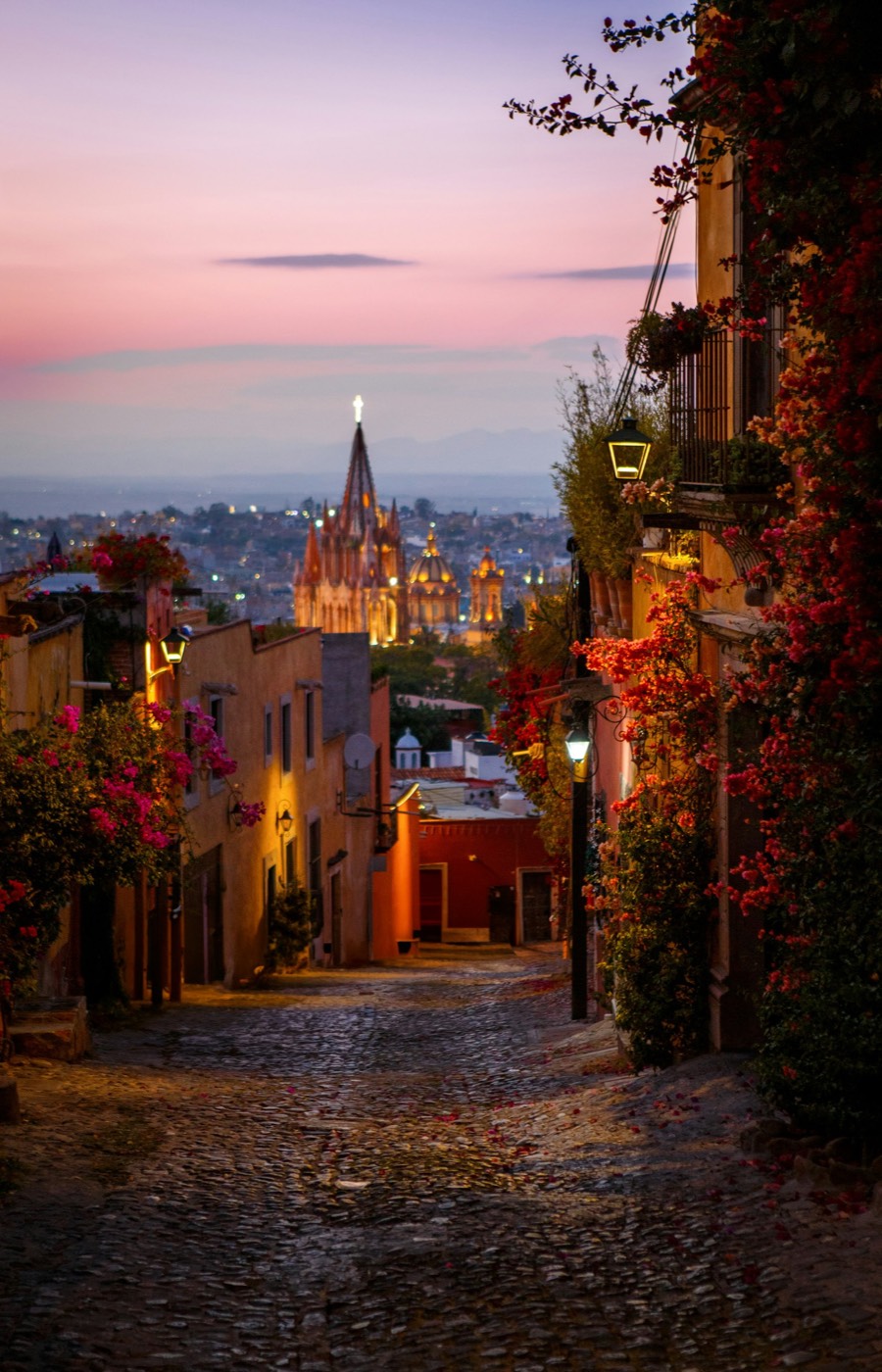
Downtown San Miguel de Allende at dusk, with the Parroquia in the distance — Photo: Mark de Jong / Unsplash
A colonial UNESCO town
The historic center of San Miguel de Allende is a UNESCO World Heritage Site, together with the nearby Sanctuary of Atotonilco. Cobblestone streets, colonial facades and the neo-Gothic Parroquia de San Miguel Arcángel make it one of the most photographed towns in Mexico. It has also been popular with international travelers for decades, so guests find good restaurants, galleries and services.
A highland climate
San Miguel sits in the highlands of central Mexico, so it's not tropical. Days are usually sunny and evenings are cool, which is comfortable for formal wear and perfect for dinner by a fire pit. The rainy season runs roughly from June to September, often as afternoon showers, so summer weddings need a covered plan.
Culture your guests will remember
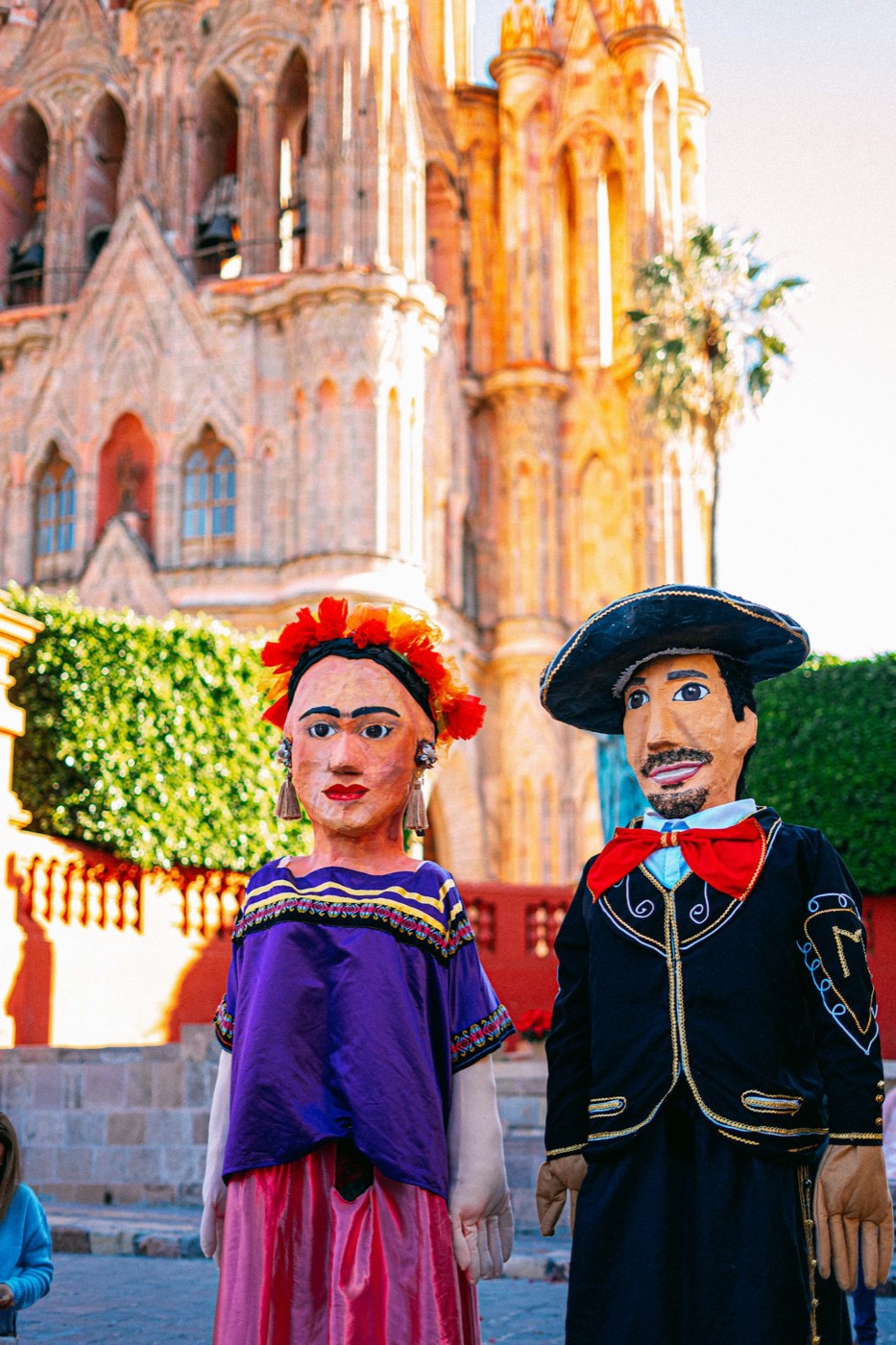
The town has its own wedding tradition: the callejoneada, a festive walk through the streets with musicians and mojigangas, giant papier-mâché puppets that dance with the guests. Downtown parades need permits, so your planner arranges them.
Mojigangas in front of the Parroquia in downtown San Miguel de Allende — Photo: Alba Rebecca / Unsplash
A vineyard setting a few minutes from town
Just outside the center, the landscape opens into countryside, lakes and vineyards. A vineyard venue gives you space, privacy and sunsets, while downtown stays close for photos and a welcome night out. For more on how couples capture both, see our guide to destination wedding photos in San Miguel de Allende.
Getting there. San Miguel has no commercial airport of its own. Guests usually fly into Querétaro (QRO), about 1h15 away by road, León/Bajío (BJX), about 1h30, or Mexico City, about 3.5 to 4 hours. Drive times are approximate, and airline routes change, so share current options on your wedding website.
What does a destination wedding weekend at a vineyard hotel look like?
When the venue has its own hotel, the whole weekend can happen in one place, and guests spend their time celebrating instead of commuting. Here is what that looks like at Vid de Luna.
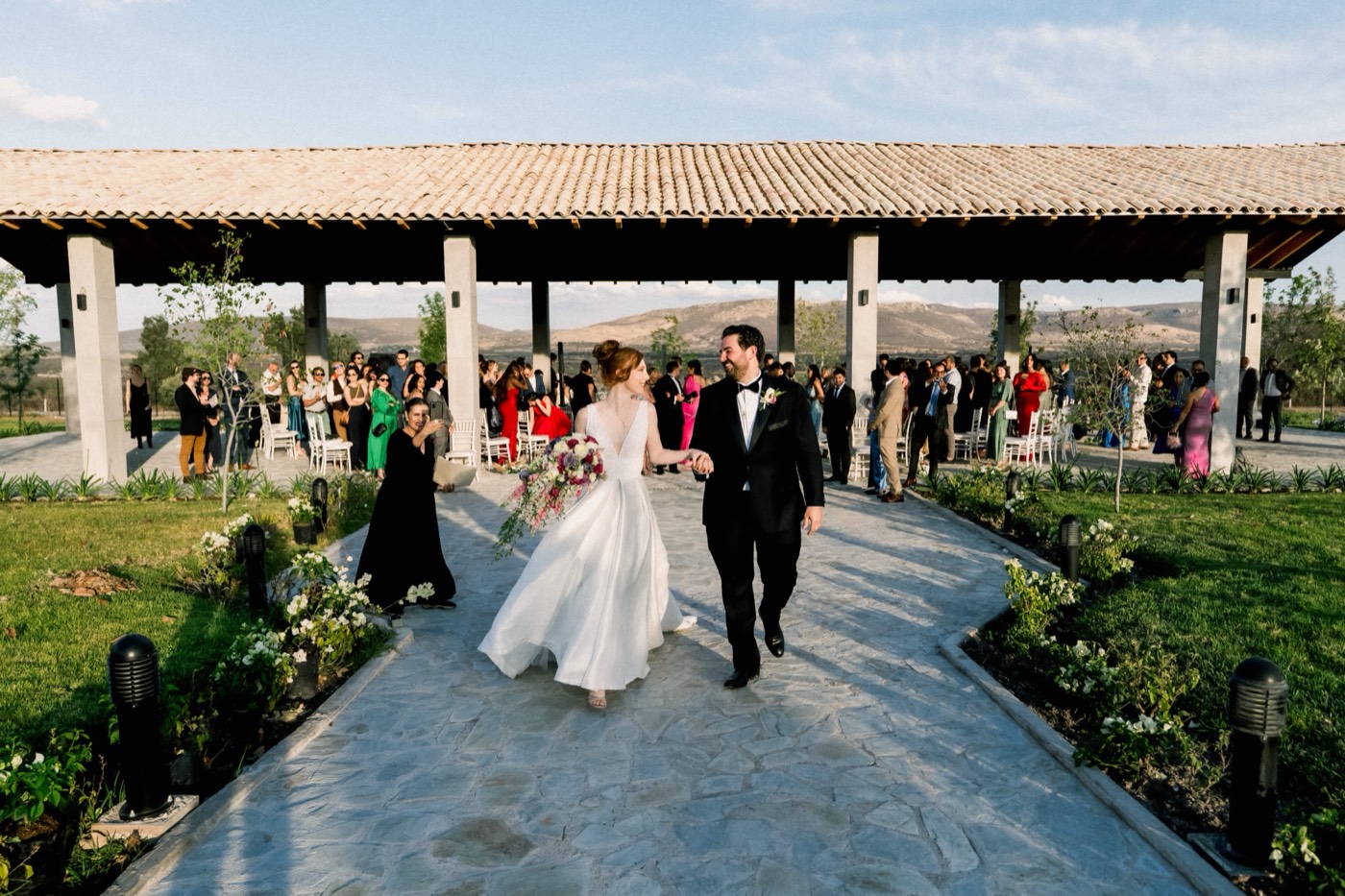
The setting. The outdoor ceremony area sits among olive trees by the lake, and there's also a chapel. The Gran Salón seats up to 800 guests behind floor-to-ceiling windows, so the reception keeps its views even if the weather turns.
The stay. Our boutique hotel hosts up to 80 guests in Family Suites, Master Suites, Double and Single rooms, and you can rent it in full. Your closest people sleep steps from the dance floor.
A sample weekend:
Friday. Guests arrive, settle in and gather in the wine cellar for a guided tasting of regional wines, then a relaxed dinner around the fire pit.
Saturday. Morning at the spa, pool or padel court; ceremony among the olive trees in the late afternoon; reception in the Gran Salón.
Sunday. A slow brunch, a soak in the hot springs or jacuzzi, and goodbyes.
Our all-inclusive packages cover catering and mixology, which means fewer vendors to coordinate from abroad. To see how packages compare across Mexico, read destination wedding packages in Mexico. For anything not listed here, such as specific dates or what a package includes for your guest count, ask us.
Legal or symbolic ceremony: what works for foreigners?
Most couples from the US and Canada marry legally at home and hold a symbolic ceremony in Mexico. It's simpler, and you keep full creative control over the ceremony itself.
A legal (civil) wedding in Mexico
It's possible, but it takes preparation. Requirements typically include passports and proof of legal entry, birth certificates with an apostille and a certified Spanish translation, witnesses and, where required, blood tests or medical certificates. A Civil Registry judge officiates.
Requirements vary by state and change over time, so confirm the current list with the Registro Civil of Guanajuato before you commit. Also check with your home authorities how to register a marriage performed abroad.
A symbolic ceremony
A friend, family member or celebrant leads it, in English, Spanish or both. You choose the words, the rituals and the length. A wine-themed ritual fits naturally at a vineyard.
Religious ceremonies
Masses and blessings are possible, each with its own requirements from the church. Start that conversation early with your parish at home.
How to start planning a destination wedding: first steps
Start with three decisions, then lock in the venue; everything else follows from there.
Set a rough budget and guest count. These two numbers rule out more options than anything else.
Pick a season. In San Miguel, consider the June–September rains and busy local holidays.
Shortlist venues and visit if you can. One well-planned trip can cover venue visits, a tasting and vendor meetings.
If you're considering a vineyard wedding in San Miguel de Allende, tell us your tentative date and guest count through our contact page or call or WhatsApp us at +52 415 113 3331. We'll check availability and walk you through the options.
Frequently asked questions
What is a destination wedding?
A destination wedding is a wedding held in a place the couple and most of their guests have to travel to, often in another country. It usually turns into a multi-day celebration, with a welcome event, the wedding day and a farewell brunch, because guests make a trip of it.
Who pays for what at a destination wedding?
Conventions vary, but in most cases the couple pays for the wedding itself and the events they host, while guests cover their own flights and lodging. Many couples help by arranging a room block, group airport transfers or on-site lodging. Whatever you decide, say it clearly on your wedding website.
How far in advance should you send save the dates for a destination wedding?
Earlier than for a hometown wedding. Eight to twelve months ahead is a common rule, so guests can request time off, renew passports if needed and book flights before fares rise. Formal invitations then go out around three to four months before.
Can Americans and Canadians legally get married in Mexico?
Yes, it is possible, but it involves paperwork such as apostilled and translated documents, and in some places medical tests. Requirements change, so confirm them with the Civil Registry (Registro Civil) of Guanajuato. Many couples sign legally at home and hold a symbolic ceremony in Mexico.
Is a destination wedding cheaper than a traditional wedding?
It can be, mostly because guest lists tend to be smaller, but it is not automatically cheaper. You add costs such as planning trips, guest welcome events and transportation. Compare a realistic budget for both options before deciding.
Why choose San Miguel de Allende over a beach destination?
San Miguel de Allende offers a UNESCO-listed colonial town, a highland climate with cool evenings, strong local traditions like the callejoneada, and countryside venues such as vineyards a few minutes from downtown. It suits couples who want culture and character rather than a resort setting.
About the author
This article is written by the events team at Vid de Luna, a vineyard with a boutique hotel in Loma de los Coyotes, Montecillo de la Milpa, San Miguel de Allende. We host weddings, corporate events and retreats here, and on this blog we share what we learn from every celebration. Questions about your event? Call or WhatsApp us at +52 415 113 3331 or use our contact page.
Picture your wedding at a vineyard in San Miguel de Allende
Vid de Luna offers a Grand Hall for up to 800 guests, garden ceremonies and an on-site boutique hotel for up to 80 guests. Check available dates.